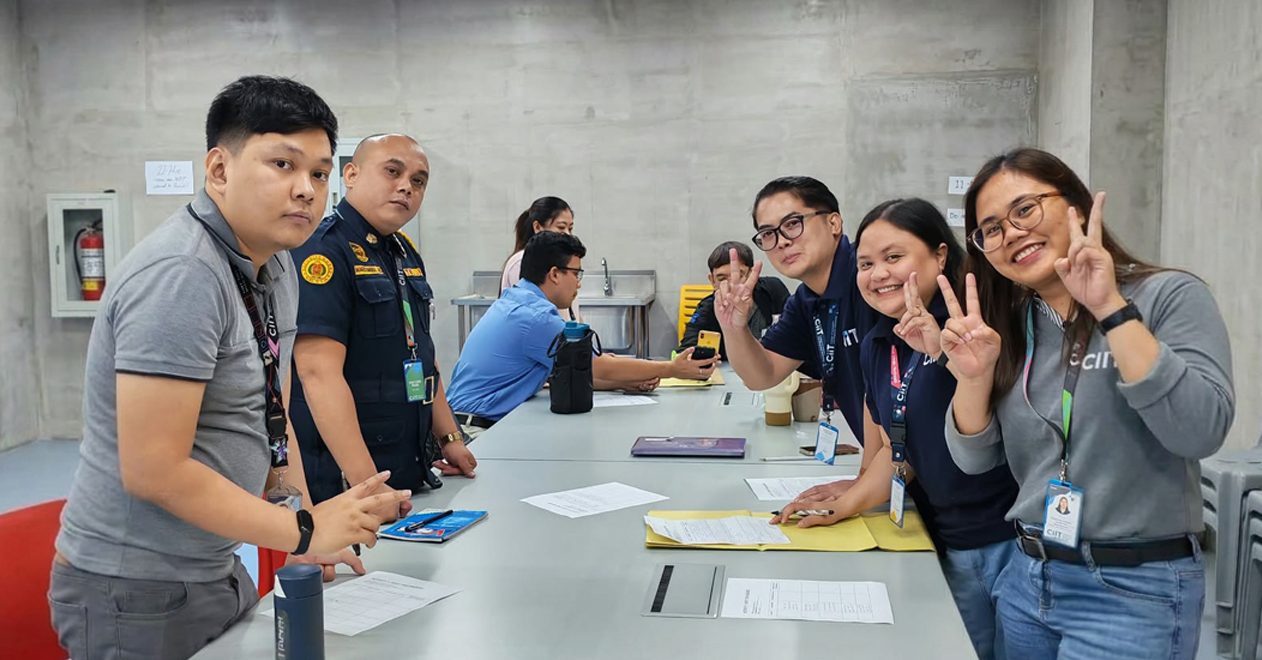
CIIT officially launched its first AI & Tech Mastery Day, a full-day learning event designed to help the community become more confident, efficient, and intentional in using modern tools at work.
Held on August 24, 2026, the event brought together members of the CIIT community from different departments, including Academics, faculty, LRC, PSI, and other support teams. It also saw strong participation from both onsite and online attendees, showing the community’s growing interest in tools that can support better teaching, collaboration, productivity, and day-to-day operations.

The event was also joined by members of the Board of Directors, Niel Dagondon and Nicole Dagondon, underscoring CIIT’s continued support for professional development, digital readiness, and practical innovation across the institution.
Spearheaded by Rommel Belvez of IT, with support from Mikko Hicarte of HR, the initiative reflected a cross-functional effort to make AI and technology learning more practical, relevant, and immediately useful for the CIIT community.
Starting with the Bigger Questions
The morning opened with the Main Forum at the Interweave Building, Room 402, from 9:30 AM to 11:30 AM. It focused on three timely topics that connected technology with real workplace needs.
Michael Pajanil opened with Ethical Use of Artificial Intelligence, guiding participants on how to use AI with awareness, responsibility, and care.
John Carlo “JC” Dizon followed with AI Anatomy: Tokens, Models, and Agents, helping participants better understand how AI tools work and how to maximize tokens more effectively.
Rommel Belvez led Workstation Basics and Maintenance, sharing practical ways to take care of PCs and laptops and improve their everyday performance.


Together, the three talks created a strong foundation for using AI responsibly, understanding the tools behind it, and maintaining the technology that supports daily work.
From Discussion to Hands-On Learning
In the afternoon, the energy shifted from listening to doing.
From 1:30 PM to 3:30 PM, participants joined breakout sessions at the Interweave Building, with rooms assigned on the 4th and 5th floors: Rooms 401, 402, 403, and 503. Each session focused on a specific tool or use case, allowing participants to choose the topic most relevant to their role.
The breakout sessions included Database Management and Simple Automations via Airtable with Ezar Quilbert “EQ” Zurbano, Prompt Engineering and Token Management via NOVA with John Carlo “JC” Dizon, Course Design for Educators via ChatGPT 5.5 Instant with Harold Cabansag, and Practical Productivity using Notion with Anne Jarem “AJ” Aguilar.
Learning That Felt Immediately Useful
What made the day meaningful was how closely the sessions connected to actual work.
Participants shared that the Airtable session helped them understand the tool in a concrete and practical way, from its basic structure to its core functions. The NOVA session resonated with those who wanted to better understand the parts of a prompt and how to maximize tokens. For educators, the ChatGPT session opened new possibilities for using AI in course outline creation and reducing repetitive workload. The Notion session also stood out for participants looking for better ways to manage personal workspaces and projects.


Across the sessions, the feedback pointed to one thing: the topics were relevant, practical, and applicable to the kind of work people at CIIT do every day.
A Workplace That Learns Together
The strong turnout, both onsite and online, showed the community’s interest in learning tools that can support better teaching, smoother operations, and more efficient collaboration.
At CIIT, growth is not treated as something reserved only for students. Employees are also given opportunities to explore new ideas, sharpen their skills, and keep pace with the changing needs of education and the workplace. Behind every student experience is a community of people who also need space to learn, adapt, and improve.
The response from participants reflected that appetite for continued learning, with some asking for more sample walkthroughs and future sessions. Another AI and tech learning session is already planned toward the end of the first term of SY 2026–2027.
For a school built around creativity, technology, and innovation, AI & Tech Mastery Day was more than a training event. It was a clear reminder of the kind of community CIIT continues to build: one that stays curious, learns with purpose, and keeps finding better ways to work together.